
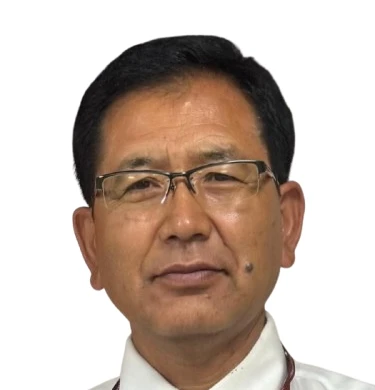
A life in these mountains
Jigmet Takpa grew up in Ladakh and became the first Indian Forest Service officer from the region. From 1997 he served as Conservator of Forests (Wildlife) and Chief Wildlife Warden of Ladakh, and he retired in 2023 as Principal Chief Conservator of Forests and Chief Wildlife Warden of the Union Territory.
For most of those years, his work was the snow leopard: its protected areas, its prey and the villages that share its valleys. He wrote the management plan for Hemis National Park in 2007, and worked with communities, scientists and conservation partners as the long shift from conflict to coexistence took hold.
"For 25 years, Jigmet Takpa walked Ladakh's highest passes and most remote valleys to answer one question: could this harsh, unforgiving landscape become the last great refuge of the snow leopard? The answer changed everything."From LADAKH: Snow Leopard Capital of the World
What the work involved
His book describes the approach that made Ladakh the Snow Leopard Capital of the World. Ladakh learned to manage whole landscapes rather than single parks. Herders became partners through homestays and snow leopard safaris. Solar power eased the pressure on scarce shrubs and pastures. Camera traps and DNA from scat began to count cats that are almost never seen.
Science and writing
He is the author of the Field Guide to Mammals of Ladakh (WWF, 2008) and of more than twenty scientific papers on Ladakh's wildlife, including the first Indian breeding record of the saker falcon, the first otter survey in Ladakh, and studies of the Pallas's cat, Tibetan gazelle, black-necked crane and waterbirds.
His book, LADAKH: Snow Leopard Capital of the World — Three Decades of Snow Leopard Conservation, tells how Ladakh came to hold the highest snow leopard density on record. About the book
National and international service
As Joint Secretary in India's Ministry of Environment, Forest and Climate Change (2017–2022), he served as India's national focal point for the UN Convention to Combat Desertification, including the COP14 hosted by India in 2019, and represented India in G20 and G7 environment meetings. He also founded the Ladakh Renewable Energy Development Agency, and has served on the Board of Governors of ICIMOD.
For thirty years, my work was to protect the snow leopard. I watched villages that once feared this cat begin to take pride in it. Tourism played a part in that change, but only when it was done with care.
Odzer is my way of continuing that work. I want the people who travel here to see the snow leopard the way we do, with patience and respect, and to leave understanding why it is still here. Every expedition I lead is small, quiet and rooted in the valleys we visit. That is the only way I know how to do it.
Jigmet Takpa